Plumbing looks uniform from the outside: water comes in, waste goes out, and the fixtures in between behave. The reality is split by scale and stakes. Residential work plays out in tight joist bays and crawlspaces with materials meant to be cut and glued quickly. Commercial work lives behind double doors and drop ceilings, tied to schedules with dozens of trades moving in parallel. The tools follow the work. They are not just bigger or more expensive, they are shaped by codes, materials, and failure risk that change when you go from a kitchen remodel to a medical facility or a high-rise.
I have worked both sides of that line. On one week, I might solder a 1 inch copper trunk to feed a four-bath house. On the next, I’m in a mechanical room aligning 6 inch grooved steel with a scissor lift humming under me. You learn quickly that the wrong tool costs more than time. It can compromise a fire rating, void a warranty, or turn a flood into a lawsuit. The differences below come from that lived contrast: what the commercial plumber pulls off the truck compared to what residential plumbing tools do best, and where they overlap.

Scale dictates power and method
A family home rarely pushes past 1.5 inch pipe for water distribution and 4 inch for waste, and much of it is plastic or Type L copper. That keeps tool size modest and hand-driven methods viable. In a commercial building, you see 2 to 8 inch mains as routine, with materials that demand specific joining systems and powered prep. That shift changes everything from cutting to lifting.
For example, pipe cutting looks simple until you try to square-cut 4 inch schedule 40 steel by hand on a ladder. In a residence, a compact tubing cutter and a fine-tooth miter saw for PVC, or a battery band saw for a few pieces of copper, will do the job. On a commercial job, crews roll in with tripod stands, chain vises, large-capacity cutters, and portable band saws with deep throat capacities. The setup time saves mistakes and chewed blades, and more importantly keeps cuts square so grooves and gaskets seat correctly.
Torque follows scale. Threading 1 inch black iron with a handheld, gear-reduced die head is doable in a basement. Threading dozens of 2 inch nipples in a mechanical room without a power threader and oil basin is asking for snapped dies and burned wrists. That difference in throughput is as much about labor coordination as it is about physics. GC schedules reward the team that can fabricate in batches and set once.
Material choices drive specialized tools
Residential plumbing tools lean toward versatility and speed on common materials: PEX, CPVC, PVC, copper. Commercial plumbing tools lean into dedicated systems: grooved steel, cast iron with no-hub couplings, large-diameter copper, stainless for process water, and specialty plastics for chemical waste.
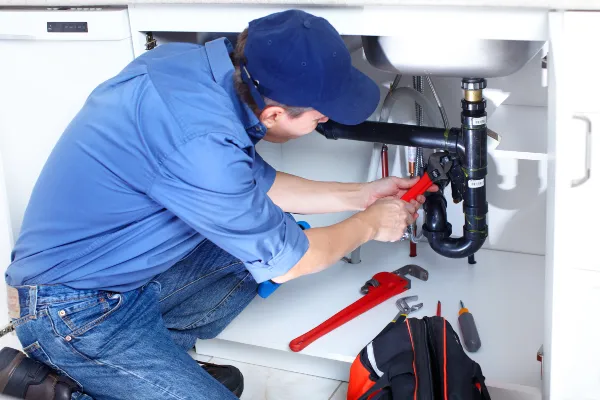
PEX versus copper is a good illustration. In homes, PEX with expansion or crimp rings is everywhere because it snakes through walls, tolerates mild freezing better, and requires a handful of tools. An expansion tool with the right heads, a crimp tool, and a go/no-go gauge cover most of it. Copper still matters, particularly near heat sources or for aesthetics at exposed runs, and residential plumbers keep a compact torch kit, press jaws up to 1.25 inch if they press, and a small deburring tool.
In commercial work, press technology becomes a different animal. A battery press tool might run 2 inch copper press fittings on one floor, then switch to stainless jaws for a food facility, then jump to 4 inch MegaPress on schedule 10 steel. You carry multiple jaw sets, calibration blocks, and inspection gauges because inspectors will check embossing and witness marks on larger joints. Where residential press is a time saver, commercial press is a strategy to avoid hot work permits, which can eat half a day in paperwork and fire watch.
Cast iron waste stacks are another dividing line. Homes still use PVC for drain, waste, and vent in many jurisdictions, glued with solvent cement and primed surfaces. You can cut it with a simple miter saw and a stop block for repeatable angles, or a hand saw in a pinch. Commercial buildings often require cast iron for noise reduction and fire performance, joined with no-hub couplings. That means a snap cutter for clean, crack-free cuts, a torque-limiting wrench to hit the band clamps to manufacturer specs, and occasionally a chain fall to hold a section while you swap a riser. When you hear the clean pop of a snap cutter, you know you used the right chain notch for the diameter and the pipe wasn’t egged.
Hot work versus cold work
Open flame has a way of changing the room. In a house, you can shield with a flame mat, keep a spray bottle and extinguisher, and sweat a few joints. Even then, a scorched stud bay or a singed insulation face is a risk. In commercial buildings, the fire system sits in the background of every decision. If a spark lands in a return plenum full of dust, you can shut down a floor. Many sites require a hot work permit, a fire watch, and sometimes a shutdown of smoke detectors, followed by a reset charge. It takes hours and involves other trades.
That is why you see far more cold methods on commercial projects. Press, grooved couplings, mechanical tees, no-hub Leander plumber banded couplings, even solvent-free gasketed PVC systems in some cases. Cold methods demand different prep tools: bevelers to clean pipe ends for gaskets, paint markers to mark insertion depth and alignment, and calibrated torque tools rather than a plumber’s judgment. When the fitting manufacturer lists a torque range for a 4 inch coupling, inspectors expect documentation. Many crews keep a simple torque chart laminated in the gang box and record when they crank a series of bands.
Layout and measurement tools grow up
Measuring a residential bathroom requires a good tape, a pencil, and a decent level. A laser line helps, but you can frame and pipe with hand tools if you know your centers and rough-ins. Commercial work adds coordination across trades and stories. You lay out hundreds of supports, sleeves, and drops that need to miss structural steel, HVAC, and electrical runs you may not see until they show up in the ceiling.
Laser levels become the rule. Plumb lasers let you stack core drills through multiple floors with offsets that meet spec. Distance meters shorten long runs in mechanical rooms without a second person. For hanger spacing on a long main, a rotary laser and smart rod save hours. I have also leaned on digital angle finders for pitched drains in large kitchens, where you need a consistent 2 percent fall across long trench runs and the floor is not as true as the slab schedule promised.
Commercial jobs also push for serialization and labeling. A handheld label printer with heat-shrink sleeves for labeling pipe by service avoids later chaos. In a home, colored PEX rings and a marker do fine.
Lifting and access
Residential plumbers develop a sixth sense for attic joists and crawlspace gymnastics, working with a headlamp and a compact reciprocating saw. When materials get heavier, the job becomes as much about access equipment as pipework. You plan your lifts.
Scissor lifts and boom lifts are commonplace on commercial sites. That affects tool choice. You pick compact battery tools to minimize trips down for a cord. You add magnetic drill presses for clean holes in steel bar joists. You keep beam clamps and rigging slings for supporting runs while coupling. Even a small thing like a rolling cart with a pipe rack changes productivity. On a hospital project, we used a cart to stage 10 foot sticks of 3 inch copper, pre-deburred and marked, which cut install time in half. That only works when you have the room and the crew flow to support it.
Joining systems and their tool sets
Grooved steel sits at the heart of many commercial systems for chilled water, condenser water, and fire protection. The grooving tool itself deserves respect. Portable roll groovers can handle up to 12 inch with the right stand and pump, but most plumbers regularly use them for 2 to 8 inch. The prep is fussy: you must ensure the pipe end is square, the groove depth matches the coupling spec, and the pipe wall thickness is in tolerance. A simple go/no-go grooving gauge prevents a leak that hides until the pressure test. In homes, you never touch a groover.
Threading presents a similar divide. Compact die heads are handy in a garage, but a power threader with flood oil cools and cleans the dies, gives consistent threads, and keeps the taper right so dope and tape seal as designed. If you have ever had a 2 inch union drip even after a double wrap and a fresh jar of dope, check the thread taper you cut on that chilly day with dull dies.
Soldering and brazing stay in the picture on both fronts, yet the torch kits change. A residential plumber often carries a small MAP-pro torch and a refill or two, and can braze with oxygen-propane manifolds for isolated joints. Commercial plumbers more often keep oxygen-acetylene rigs for larger copper or refrigeration lines, purge kits for nitrogen to prevent scale, and dedicated brazing rods by alloy. They also carry gas monitors in confined spaces. The difference is not just volume, it is accountability. When you braze a 3 inch copper header in a plant room, you log the purge, the heat, and the leak test.
Coring, drilling, and anchoring
Holes in wood are forgiving. Holes in concrete and structural steel demand planning, temporary protection, and the right bits. A cupboard installer’s hole saw won’t touch a five-inch slab.
Residential drilling usually means spade bits, hole saws, step bits, and a set of augers. Most of it sits in wood studs or joists, with a few Tapcon anchors into a foundation wall. Anchor choice is straightforward and rarely engineered.
Commercial drilling grows into a kit: SDS-max rotary hammers for 5/8 to 1 inch anchors, core drills with stands and vacuums for sleeves and risers, rebar locators so you do not cut reinforcing without permission, and anchor installation tools with torque verification. Many specs call out ICC-rated anchors and pull test records, which means you need testing equipment and a way to log results. The tool is not just the drill, it is the paperwork binder that proves the anchor is in spec.
The metal side is similar. You switch from cheap bi-metal hole saws to carbide-tipped annular cutters and mag drills for crisp penetrations in beams. One bad hole in a flange can mean a structural engineer and a pile of shims you did not plan for.
Diagnostics and maintenance tools
When people imagine a plumber’s day, they think about install, not finding the thing you cannot see. On residential service calls, diagnostics revolve around small-diameter snakes, compact inspection cameras, pressure gauges, and a simple manometer for gas work. The camera heads are small and flexible, and battery life matters more than extreme reach.
Commercial service multiplies the range and adds documentation. You bring push cameras with larger heads and self-leveling, sondes for locating, and sometimes modular crawler cameras for long mains. Hydrostatic test pumps capable of higher volumes fill large systems faster and hold steady pressure for long tests. You keep calibrated digital manometers for medical gas or lab systems, and chart recorders to log data for commissioning. On some jobs, the verification toolkit weighs more than the drill case.
Even the drain cleaning arsenal evolves. A residential plumber can handle most lines with a mid-size drum machine and a few heads, plus a small jetter for grease lines. In commercial kitchens, you need a higher-flow jetter, grease cutting nozzles, and a trap adapter set that seals oddball floor drains found in older buildings. The clogs are not just hair and soap, they are starch, napkins, and fryer waste that never should have made it past the interceptor.
Safety gear integrated with tools
The bigger the job, the more your tool choices must respect safety systems. Hearing protection and gloves are the baseline, but commercial plumbing tools often include safety devices built in. Torque wrenches with slip clutches to prevent over-tightening, insulated tools when working near electrical busways, and gas monitors that stay clipped to your vest. Lockout-tagout kits become a daily tool when you isolate pump circuits or control power for VFDs. In a house, you can turn off a breaker and tape it. In a plant, you follow a documented sequence.
The respiratory side also changes. Solvent cements for PVC can be rough in an enclosed crawlspace, yet you can control it with local ventilation and a cartridge respirator. In a large mechanical room with fresh paint, epoxy anchors, and welding in one corner, the atmosphere mixes unknowns. Many commercial crews carry multi-gas meters and make it habit to check before cutting or brazing, especially near sumps or pits that collect vapors.
The battery platform question
A plumber’s productivity hinges on battery tools now, but the platform debate carries different weight by market. In residential work, it is common to standardize on one line for drills, impacts, press tools, and lights, choosing based on ergonomics and dealer support. You want compact, lightweight, and enough runtime to work a full day with two or three battery swaps.
Commercial work often forces a mixed fleet. One platform might carry your band saws and impacts, another has the press tool you need for 4 inch steel, and a third supports the threader motor or the specialty crimper with jaws nobody else makes. That complicates charging stations on lifts and in gang boxes. I have seen crews label batteries by zone and install lockable, GFCI-protected charging strips with timers. It sounds fussy until your press tool dies mid riser and the only charger sits two floors down in another subcontractor’s cart.
Fabrication and prefabrication
Time on site costs more than time in a shop. Residential plumbers do almost everything in place, cutting and fitting as the walls open. Prefab is limited, maybe a shower valve assembly built on a piece of plywood and carried in. The variance in wall framing and homeowner decisions makes heavy prefab risky.
Commercial plumbing embraces prefab where drawings are firm. Racks carrying parallel runs of copper, steel, and conduit are built in a shop with jigs. That changes the tool set. Chop saws with coolant, full-size band saws, stationary threaders, groovers on benches, and welding booths add consistency. You lay out with measuring tables and templates, then ship to site with lifting eyes already attached. On-site tools shift to installation and alignment: lasers, chain falls, and adjustable supports. The result is fewer surprises, cleaner welds or presses, and faster inspections, as long as coordination drawings were accurate. When they are not, you pay in field rework and a few choice words.
Codes, inspections, and proof tools
Both markets answer to code, but the paper trail tightens in commercial environments. Residential inspections are typically visual with spot pressure tests and fixture function checks. The plumber’s tools for compliance are a test gauge, an air compressor or water feed, and maybe a hand pump to top off. Photos on a phone suffice.
Commercial inspections may require recorded pressure curves, weld logs, brazing certs, grooved coupling batch numbers, and torque reports. Tools follow: digital gauges that log over hours, barcoded jaws and tools that record press counts, and apps to produce reports. This is not window dressing. If a chilled water loop loses pressure at night, you want more than a shrug when the owner asks what changed between the initial test and turnover.
Cost, redundancy, and the apprentice factor
A homeowner’s tool budget looks small next to a contractor’s, but cost still shapes decisions. In residential work, the tool set can be compact with a few strategic upgrades. A press tool up to 1.25 inch, a reliable inspection camera, and a mid-range jetter cover most high-value work. You buy quality hand tools because they last decades.
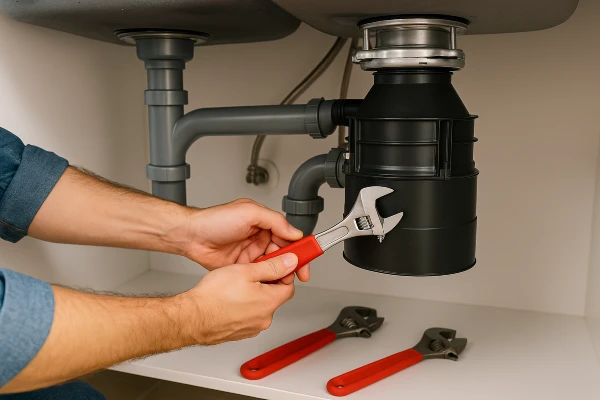
Commercial crews need redundancy. Two press tools so one can charge while the other runs, a backup groover head, extra torque wrenches in different ranges. The cost is not just purchase price, it is lost labor if a single tool goes down. Apprentices learn on duplicates to keep the pace. That changes training, too. You teach not only how to sweat a joint, but how to document a press, calibrate a torque wrench, and inspect a grooved coupling gasket for defects.
I also look at warranty and service turnaround. A press tool that takes three weeks for repair can derail a schedule. Dealers who can loan tools bridge that risk. Residential plumbers can sometimes wait or rent. Commercial teams plan for the downtime with spare kits.
Where the lines blur
Despite all these differences, there is plenty of overlap. An experienced plumber can bring commercial discipline into a residential project and be better for it. Using a torque screwdriver on closet flange bolts to avoid cracking porcelain, labeling hot and cold runs in a mechanical closet, pressure testing zones with a digital gauge to catch tiny drops, or choosing press instead of solder near old, dry framing to reduce fire risk. These habits raise quality.
Residential ingenuity also improves commercial jobs. I have used compact PEX expansion tools to solve tight chase conditions in a hotel retrofit, where larger press heads could not turn. I have borrowed a homeowner’s trick of a vacuum and a rag to prevent a small leak from pooling while I swapped a valve under partial pressure in a pinch, with the owner’s consent and isolation upstream.
Choosing the right set for the work in front of you
If you are stocking up or shifting markets, think in clusters rather than individual tools. In commercial settings, a grooved system cluster might include a roll groover, deep-cut band saw, heavy tripod and chain vise, calibrated torque wrenches, paint markers, a groove gauge, and lift access. A cast iron waste cluster includes a snap cutter, torque wrench for no-hub bands, riser clamps, and a chain fall. For press, think multiple jaw sets, a press tool with spare batteries, a calibration block, and manufacturer inspection cards.
In residential settings, the high-value cluster often starts with PEX: expansion or crimp tools, a cutter that gives clean square ends, and a set of stiffeners for transitions. Add a compact press tool for copper near water heaters or in tight basements where flame is a bad idea. Round out with a reliable camera, a mid-size drain machine, and a torch kit that can do both soft solder and small brazes. Keep blades and bits fresh, because the best tool is hobbled by a dull consumable.
Finally, consider the human side. If your crew is moving up in size, train on the new tools before the job demands it. A Saturday in the shop grooving scrap pipe or recording press crimps is cheaper than a leak at 200 psi on a Monday. If you are stepping from commercial to residential, do the opposite: practice fast, clean work in tight spaces, and pack lighter without sacrificing essentials.
A brief comparison at a glance
- Residential standouts: compact press tool up to 1.25 inch, PEX expansion or crimp kit, tubing cutters, small torch set, inspection camera, mid-size drain machine. Commercial standouts: roll groover, power threader with oiling, deep-cut band saw, calibrated torque wrenches, large press tool with multiple jaw sets including steel, core drill with stand, scissor lift access and rigging.
The tools mirror the work. Residential favors agility, simplicity, and speed through small spaces with forgiving materials. Commercial demands repeatability at scale, documented joints, and safe cold methods that pass inspection the first time. A good plumber can cross over, but the tool bag must change with the job. When you respect that, you spend less time fighting your gear and more time delivering systems that run quietly, pass tests, and make the inspector nod without a second glance.
THE LEANDER PLUMBER - COMPANY 1789 S Bagdad Rd #103, Leander, TX 78641 (737) 530-8021